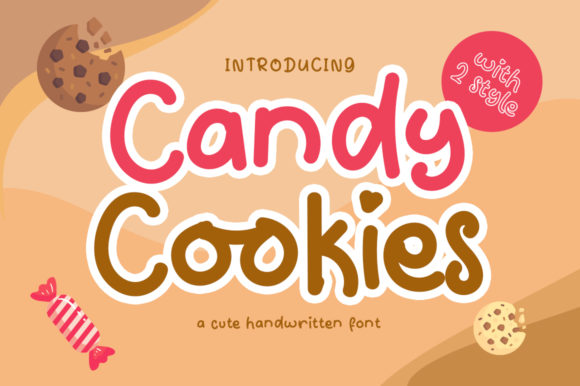
Candy Cookies: A Fun Handwritten Font for Digital Design
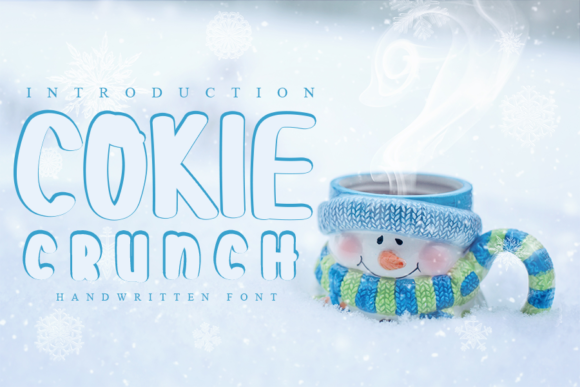
As a web designer who ships landing pages, SaaS dashboards, and boutique e-commerce experiences, I reach for Candy Cookies when I need a Script Handwritten font that feels human—not hurried. It’s not just another decorative Fonts download; it’s a rhythm-driven, personality-first display typeface built for moments where warmth, charm, and intentionality matter most—like a hero headline that stops scrolling or a “Join Us” button that feels like an invitation.
Candy Cookies for Wedding Invitations and Elegant Branding
Candy Cookies brings tactile sincerity to digital wedding brands—think microsites, RSVP portals, or email campaigns where sterile sans serifs fall flat. Its playful yet refined letterforms (notice the gentle bounce in the ‘y’, the tapered flourishes on lowercase ‘g’ and ‘s’) lend elegance without formality. On a responsive wedding invitation site, I use Candy Cookies at 48–64px for the couple’s names in the hero section, then pair it with a clean, neutral sans serif (like Inter or Manrope) for date, venue, and RSVP details. This contrast builds visual hierarchy while preserving emotional resonance. Because Candy Cookies is a Script Handwritten font optimized for clarity—not just decoration—it remains legible even on mobile screens when scaled down to 32px for secondary headings.
Candy Cookies for Logo Design and Signature-Style Labels
If your brand voice leans artisanal, joyful, or authentically personal—a handmade skincare line, a children’s learning app, or a creative coaching practice—Candy Cookies works exceptionally well as a logo wordmark or signature accent. Unlike overly ornate scripts, its consistent x-height and open counters ensure readability at small sizes: it holds up cleanly on favicons, app icons, and product labels rendered in SVG or webfont formats. As a Fonts asset, Candy Cookies includes standard OpenType features ideal for logo work—ligatures, stylistic alternates, and contextual swashes—so you can fine-tune spacing and flow without manual vector adjustments. For digital labels (e.g., “Hand-Poured,” “Limited Edition,” “Founder’s Note”), apply Candy Cookies at 20–24px over light or muted backgrounds, always testing contrast against WCAG AA minimums.
Candy Cookies for Headings and Conversion-Focused Landing Pages
In high-conversion landing pages, Candy Cookies excels as a primary heading font—not body copy, but the emotional anchor. I use it for H1s (“Your First Class Is On Us”), subheadings (“Designed for curious minds, not crowded curriculums”), and even short CTA buttons (“Grab My Spot”) when the audience responds to approachability over authority. Because Candy Cookies is a Script Handwritten font with generous letter spacing and natural rhythm, it avoids visual clutter—even when set tightly on narrow mobile viewports. Just avoid stacking more than two lines of Candy Cookies in a row; instead, break hierarchy using size, weight contrast, and whitespace. For example: Candy Cookies (H1, 56px), Inter Bold (H2, 32px), Inter Regular (body, 18px).
Candy Cookies for Online Store Banners and Product Packaging Mockups
E-commerce designers know that banner typography sets tone before users read a single word. Candy Cookies adds instant character to Shopify banners, Etsy shop headers, or digital packaging mockups—especially for confectionery, stationery, baby goods, or lifestyle brands. Its soft curves and slight irregularity suggest craft and care, helping products feel hand-selected rather than algorithmically recommended. When used over image overlays, I recommend applying a subtle text shadow (1px black @ 30% opacity) or a semi-transparent background bar to maintain legibility. As a Fonts file, Candy Cookies delivers clean WOFF2 support for fast loading—critical for store performance scores—and includes uppercase-only variants ideal for all-caps banner treatments.
Candy Cookies for Signatures and Branded Email Footers
A handwritten signature in an email footer or digital newsletter isn’t just decorative—it’s a trust signal. Candy Cookies delivers authenticity without looking like a generic brush script. I embed it as a webfont in branded email templates (via @font-face fallbacks) for founder sign-offs or limited-edition campaign headers. Its natural baseline variation and connected flow mimic real pen movement, making automated communications feel personally composed. For accessibility, I always wrap Candy Cookies-styled text in semantic or tags—not images—and keep signature lines under 12 words. As a Script Handwritten font, it pairs effortlessly with system fonts for fallbacks, ensuring graceful degradation across clients.
Candy Cookies for Invitations and Digital Event Announcements
Whether launching a virtual workshop, announcing a product beta, or inviting users to a community Discord, Candy Cookies transforms dry event copy into something memorable. Its energy works especially well in animated SVG headers or interactive countdown sections—where subtle letter wobble or staggered reveal animations enhance engagement. Use Candy Cookies for the event title and host name, then switch to a highly legible sans serif for time, timezone, and registration links. Since Candy Cookies is a premium Fonts asset, it includes multilingual Latin character support—covering accents for French, Spanish, and Portuguese announcements without rendering issues.
Candy Cookies Licensing for Websites and Client Projects
All Candy Cookies licenses include full commercial rights for websites, client deliverables, SaaS interfaces, online stores, and digital templates—no per-page fees or subscription walls. You’re covered whether embedding it via CSS @font-face, hosting on Netlify/Vercel, or bundling into Figma design systems. Just verify your license includes webfont files (WOFF/WOFF2) and confirm usage aligns with your project scope—e.g., unlimited domains for agencies, or single-site use for freelancers. As a Script Handwritten font built for real-world digital workflows, Candy Cookies ships with clear documentation, variable-ready naming conventions, and no hidden restrictions—so you ship faster, not slower.